What is Augmentin? Augmentin (generic name: co-amoxyclav) is a penicillin antibiotic. Augmentin contains a combination of amoxicillin and clavulanate (clavulinic acid) potassium. Amoxicillin is an antibiotic in a group of drugs called penicillins. Amoxicillin fights bacteria in the human body. Clavulanate potassium is a form of clavulanic acid, which is similar to penicillin. Clavulanate potassium fights bacteria which are often resistant to penicillins and other antibiotics. Augmentin is used to treat many different infections caused by bacteria, such as bronchitis, sinusitis, skin infections (e.g. cellulitis), lung infections (pneumonia), ear infections, and urinary tract infections (UTIs). Oral co-amoxyclav - Augmentin
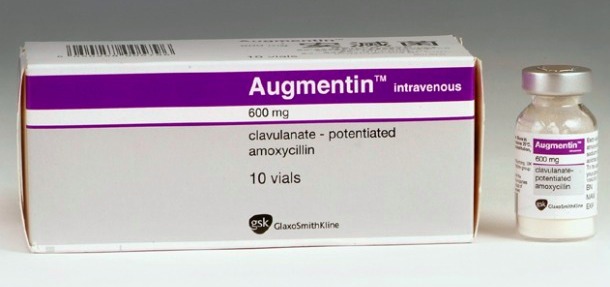
Important information about Augmentin Do not use Augmentin if you are allergic to amoxicillin or clavulanate potassium, or if you have ever experienced any liver problems caused by Augmentin. Do not use Augmentin, if you are allergic to any other penicillin antibiotic, such as amoxicillin (Amoxil, Augmentin, Dispermox, Moxatag), ampicillin (Principen, Unasyn), dicloxacillin (Dycill, Dynapen), oxacillin (Bactocill), or penicillin (Bicillin L-A, PC Pen VK, Pfizerpen), and others. Before taking Augmentin, tell your physician if you have any liver disease (or a history of hepatitis or jaundice), any kidney disease, or infectious mononucleosis ("kissing disease"), or if you are allergic to any cephalosporin antibiotics, such as cefdinir (Omnicef), cefprozil (Cefzil), cefuroxime (Ceftin), cephalexin (Keflex), and others. If you switch from one tablet form to another (regular, chewable, or extended-release tablet), you must take only the new tablet form and strength prescribed for you. This medicine may not be as effective or could be harmful if you do not use the exact tablet form your physician has prescribed. Amoxicillin and clavulanate potassium can pass into breast milk and may harm a breastfeeding baby. Do not use this medication without telling your doctor if you are breast-feeding a baby. Augmentin can make birth control pills (oral contraceptive pills - OCPs) less effective. You must ask your doctor about using a non-hormone method of birth control (such as a condom, diaphragm, spermicide) in order to prevent an unwanted pregnancy while taking Augmentin. IV Co-amoxyclav - Augmentin
Before taking Augmentin Do not use Augmentin if you are allergic to amoxicillin or clavulanate potassium, or if you have ever had liver problems caused by this medication. Do not use if you are allergic to any other penicillin antibiotic, such as amoxicillin (Amoxil, Augmentin, Dispermox, Moxatag), ampicillin (Principen, Unasyn), dicloxacillin (Dycill, Dynapen), oxacillin (Bactocill), or penicillin (Bicillin L-A, PC Pen VK, Pfizerpen)), and others. To make sure you can safely take this medicine, tell your physician if you have any of these other conditions:
Augmentin is not expected to be harmful to an unborn baby. Tell your doctor if you are pregnant or plan to become pregnant during treatment. Augmentin can make birth control pills less effective. Ask your doctor about using a non-hormone method of birth control (such as a condom, diaphragm, spermicide) to prevent pregnancy while taking Augmentin. Amoxicillin and clavulanate potassium can pass into breast milk and may harm a nursing baby. Do not use Augmentin without telling your doctor if you are breast-feeding a baby. The liquid and chewable tablet forms of this medication may contain phenylalanine. Talk to your doctor before using these forms of Augmentin if you have phenylketonuria (PKU). |

Make a Free Website with Yola.
