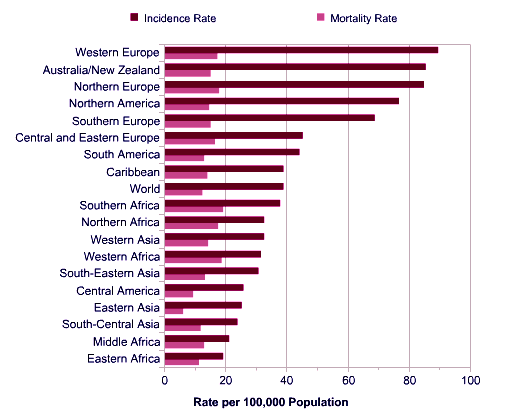
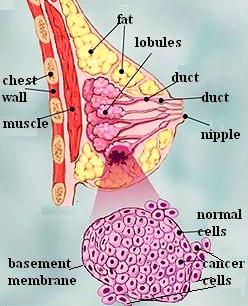
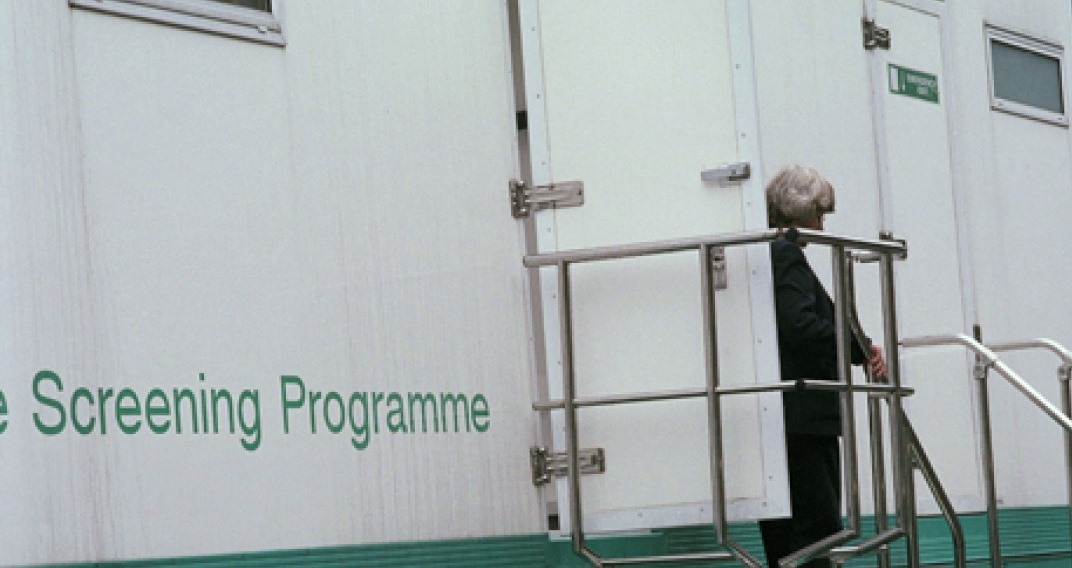
The exact causes of breast cancer are not fully understood, but there are many different factors which either increase or decrease the risk of developing the disease, including age and family history. Women who undergo through assessment of their breast cancer risk, and are found to have a higher-than-average risk of developing breast cancer (assessed as having moderate or high risk, and not low risk), may be offered extra screening, and in some instances genetic testing for the disease. Since the risk of breast cancer rises with increasing age, all women who are between the age of 50 and 70 years old, are invited for breast cancer screening every two to three years. Women over the age of 70, are also entitled to screening, but they need to arrange for an appointment through their doctor or their local screening unit. Breast cancer is usually treated using a combination of surgery, endocrine therapy, chemotherapy, and radiation therapy (radiotherapy). Some women with HER2/neu-positive breast cancer may also be treated using biological treatments (e.g. Herceptin). The daily life of a woman can be affected in many ways, after a diagnosis of breast cancer. However, there is available support for many aspects of living with the disease, including emotional, financial and long-term health issues. In general, in developed countries, 1 in 9 women are affected by breast cancer sometime during their lifetime. Due to much research in the field, currently there is a fairly good chance of recovery, if breast cancer is detected in its early stages. It is for this reason, that it is extremely important for all women to check their breasts regularly (at least once every month) for any changes, and always get any new changes examined by their doctor. Treatment of breast cancer is based on the characteristics of the tumour (e.g. size, stage, rate of growth), and hence is individualised for every woman affected by the disease. Treatment may include surgery, drugs (hormonal, (endocrine) therapy and chemotherapy), radiotherapy, and/or immunotherapy. Removal of the cancer by surgery provides the single largest benefit, with surgery alone curing many patients. In order to further increase the likelihood of cure (i.e. cancer not coming back), several chemotherapy regimens are commonly used in addition to surgery (neo-adjuvant chemo if given before surgery to shrink the tumour, or adjuvant chemotherapy if given after surgery to prevent it coming back). Radiotherapy is usually used after lumpectomy (wide local excision (WLE))/ breast-conserving surgery), and significantly improves local relapse rates, and in many instances, also the overall survival. Some breast cancers are sensitive to hormones such as oestrogen and/or progesterone (ER(+ve) / PR(+ve)), and it is possible to treat the cancer by blocking these hormones and their effects. |
Make a Free Website with Yola.
